Point Reyes is twenty miles from my home, and I have never once arrived there knowing exactly what I was going to find.
That uncertainty is the point.
The National Seashore sits at the edge of a marine layer that has its own logic, its own schedule, and no particular interest in cooperating with mine. Some mornings the fog holds until noon, turning the headlands into something monochrome and still. Other mornings it burns off fast, leaving a clarity that makes the ocean look closer than it is. On the rarest days — the ones I plan my whole week around — it does both, lifting just long enough to let warm light slip through before rolling back in from the west.
You cannot predict which version of Point Reyes you're going to get. You can only show up and be ready.
Tomales Bay
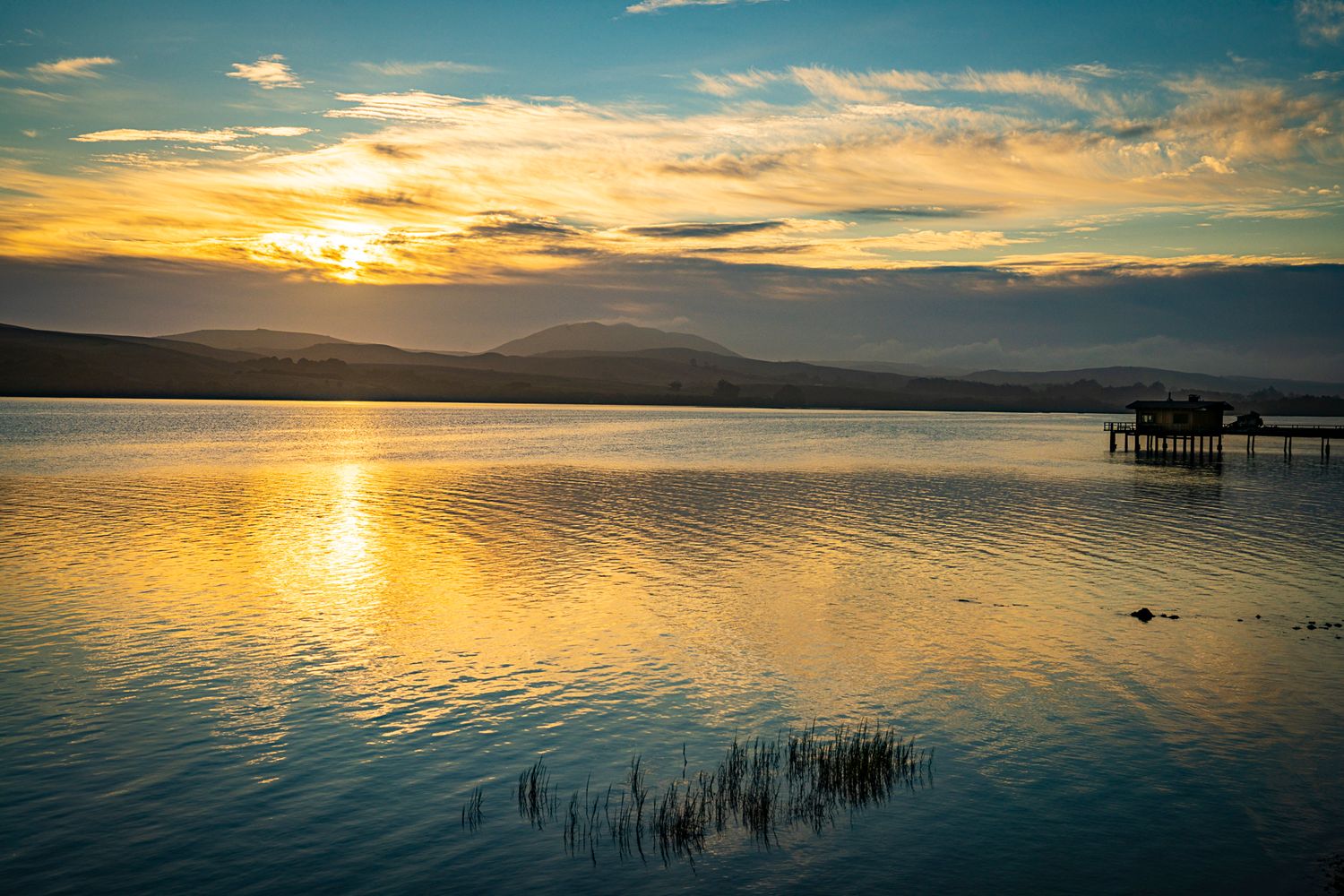
Tomales Bay is where I often start, especially in winter. The bay runs along the eastern edge of the peninsula, sheltered from the ocean wind and fog, and in the early morning the water holds the light in a way the open coast rarely does. The surface goes still before sunrise, and if there's any color in the sky at all, it lands on the water and stays there.
I've pulled off along Highway 1 more times than I can count just to watch the fog sitting over the far ridge while the bay below it stays clear. That contrast — the soft gray ceiling, the silver water, the dark line of the hills — is one of the defining images of this part of the coast for me. It photographs best from the water's edge, where you can use the shoreline to lead the eye across the frame.
Mount Vision
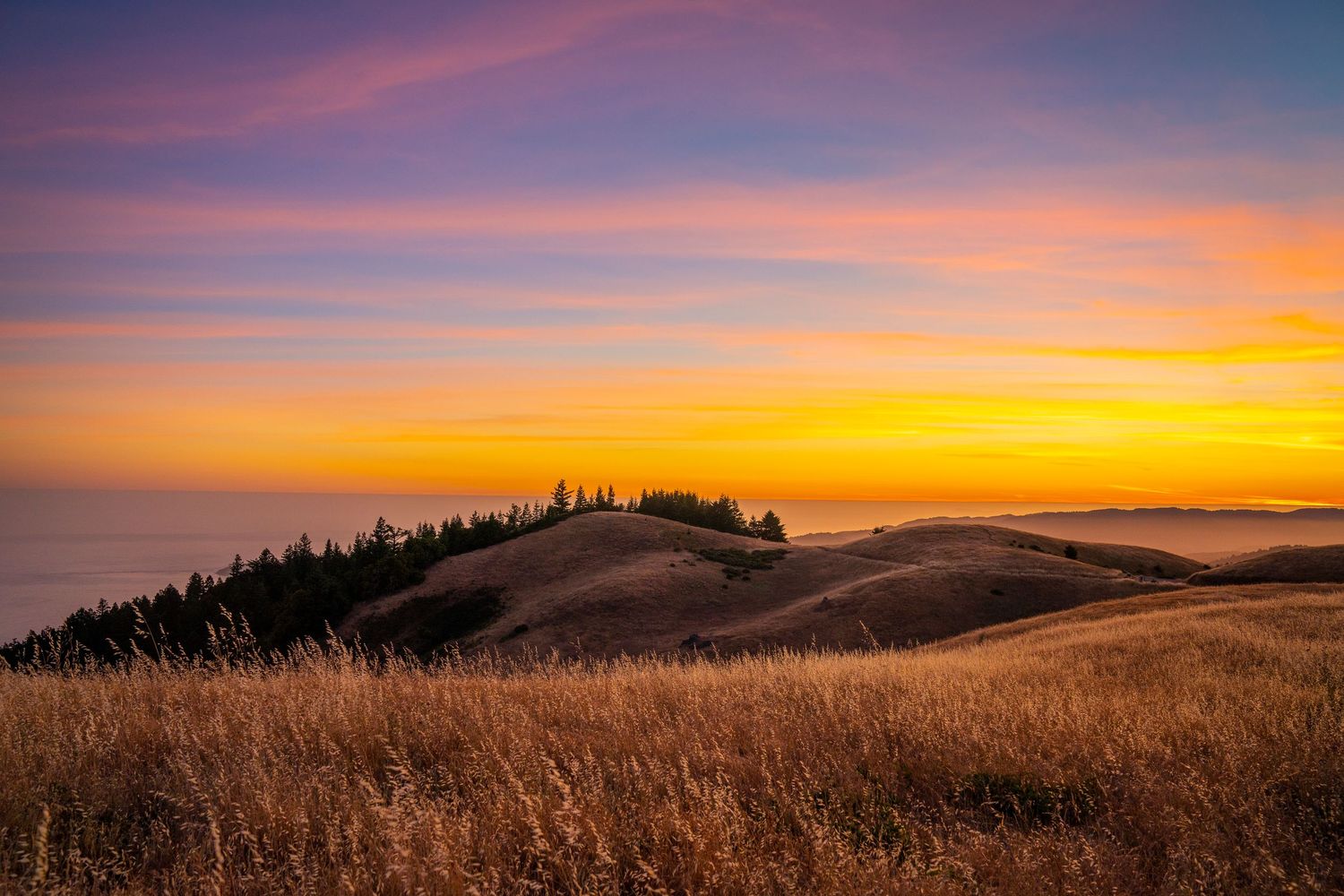
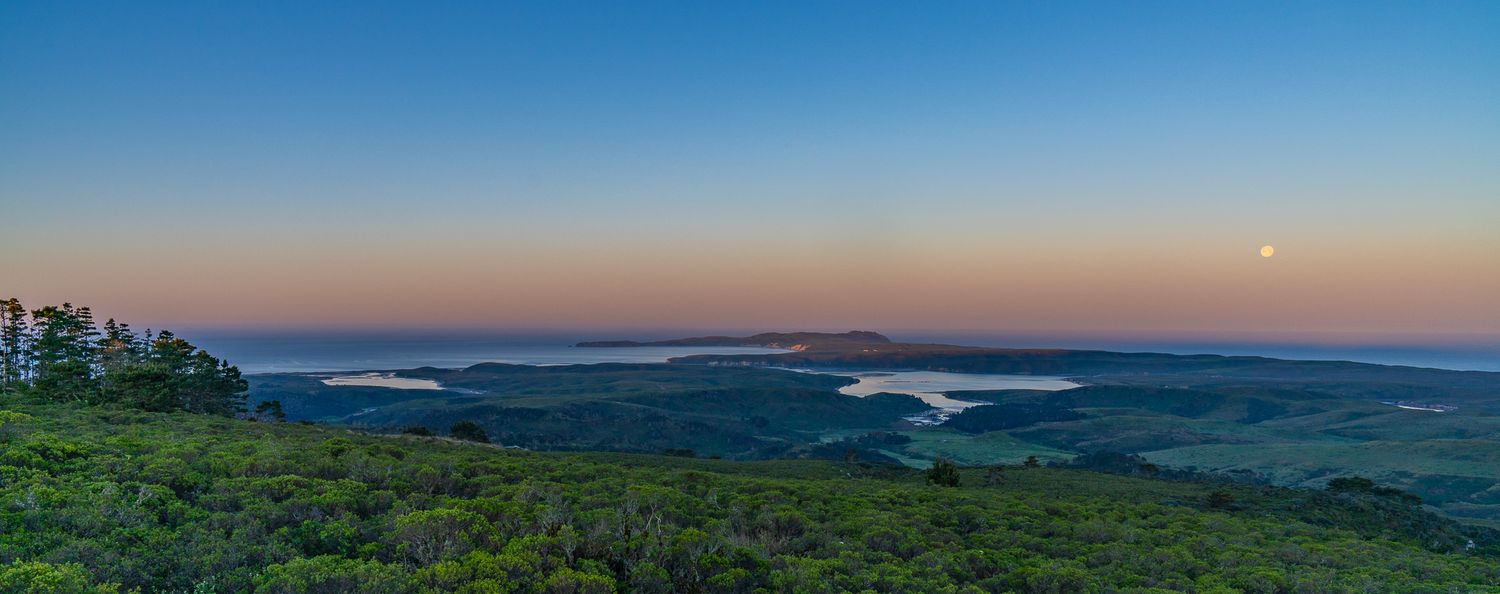
Mount Vision sits in the middle of the peninsula and offers something you can't get from the beaches: elevation. From the ridge road near the top, you're looking out over the entire sweep of the headlands, with Drakes Bay below and the Pacific beyond it. On foggy mornings, the view from up here can be extraordinary — the bay disappears beneath a white blanket and only the highest ridges break the surface, like islands.
The light on Mount Vision changes fast. I've watched entire valleys fill with fog in the time it takes to walk from the car to a composition. That speed is both the challenge and the reward. If you're up there at the right moment, you'll see something that won't exist again for months.
Drakes Beach
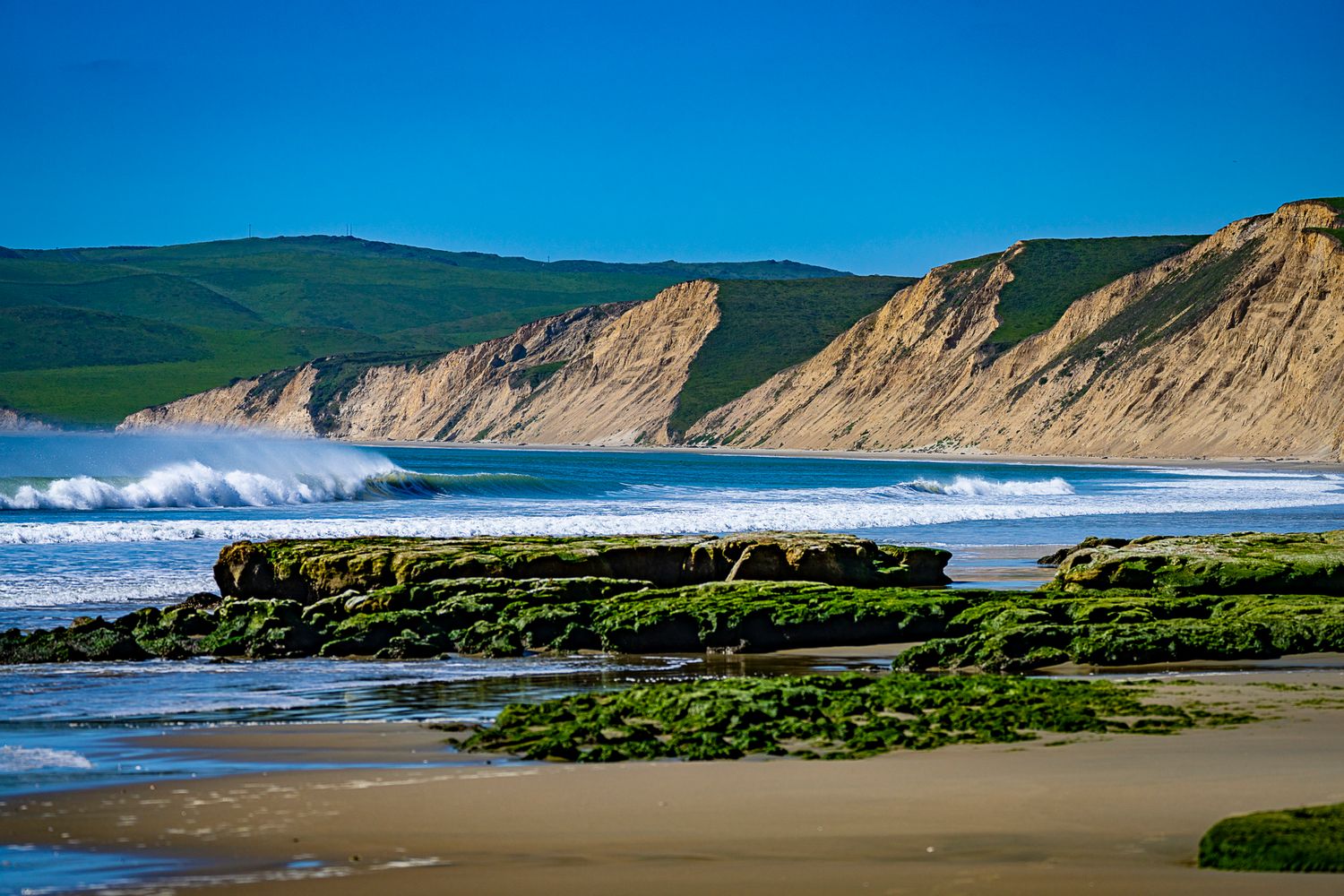
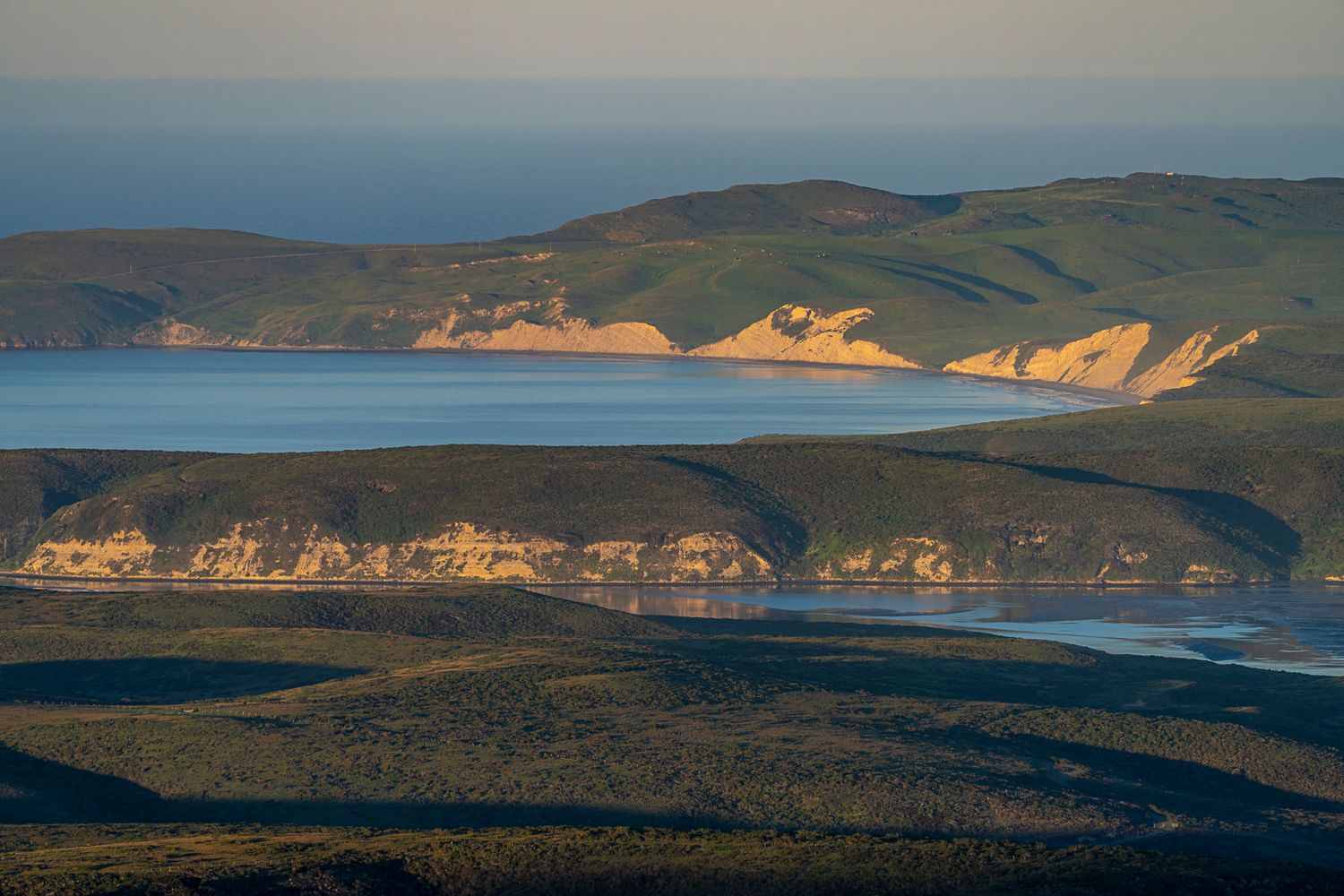
Drakes Beach is sheltered in a way the other beaches aren't. The cliffs behind it block the wind, and the curve of the bay means the light arrives at a different angle than it does at the more exposed stretches to the north. In the late afternoon, the white chalk cliffs take on a warmth that's unlike anything else at Point Reyes — almost Mediterranean in certain light.
I find Drakes Beach most interesting in the shoulder seasons, when the beach is empty and the light lingers. In summer the crowds arrive and the mood shifts. But in October or February, with the cliffs reflecting golden hour light onto wet sand, it's one of the most quietly beautiful places I know.
Limantour Beach
Limantour is a long arc of sand at the end of a road that winds through estuary and dune scrub, and in the early morning it's almost always empty. The light hits the water directly from the east, and if the fog is sitting just offshore — close enough to soften the horizon but not so thick that it kills the color — the effect can be extraordinary.
The grasses at the edge of the dunes catch the backlight in a way that turns them briefly luminous, almost transparent. You have maybe fifteen minutes when that light is exactly right before the angle shifts and it's gone.
North Beach and South Beach
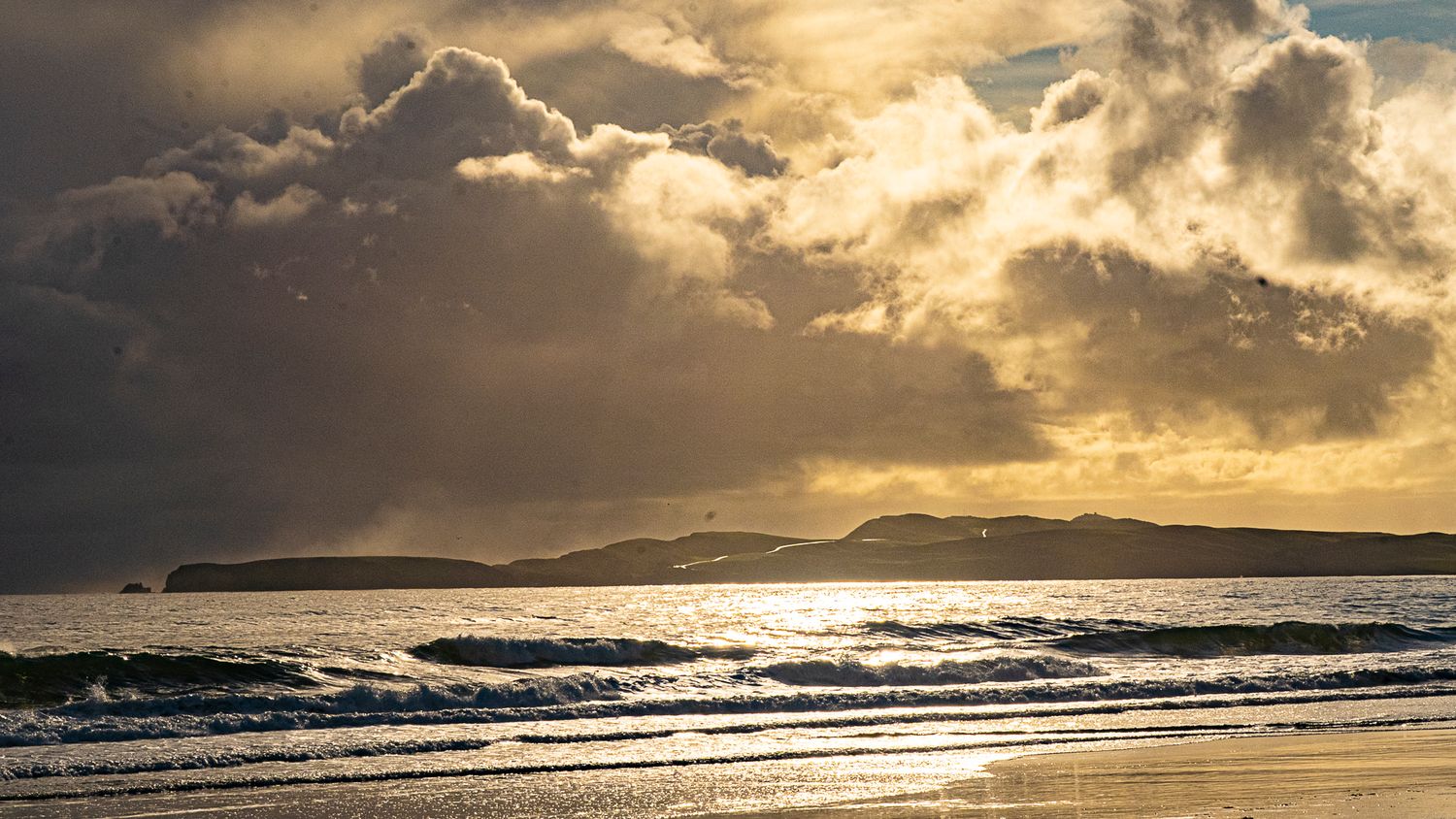
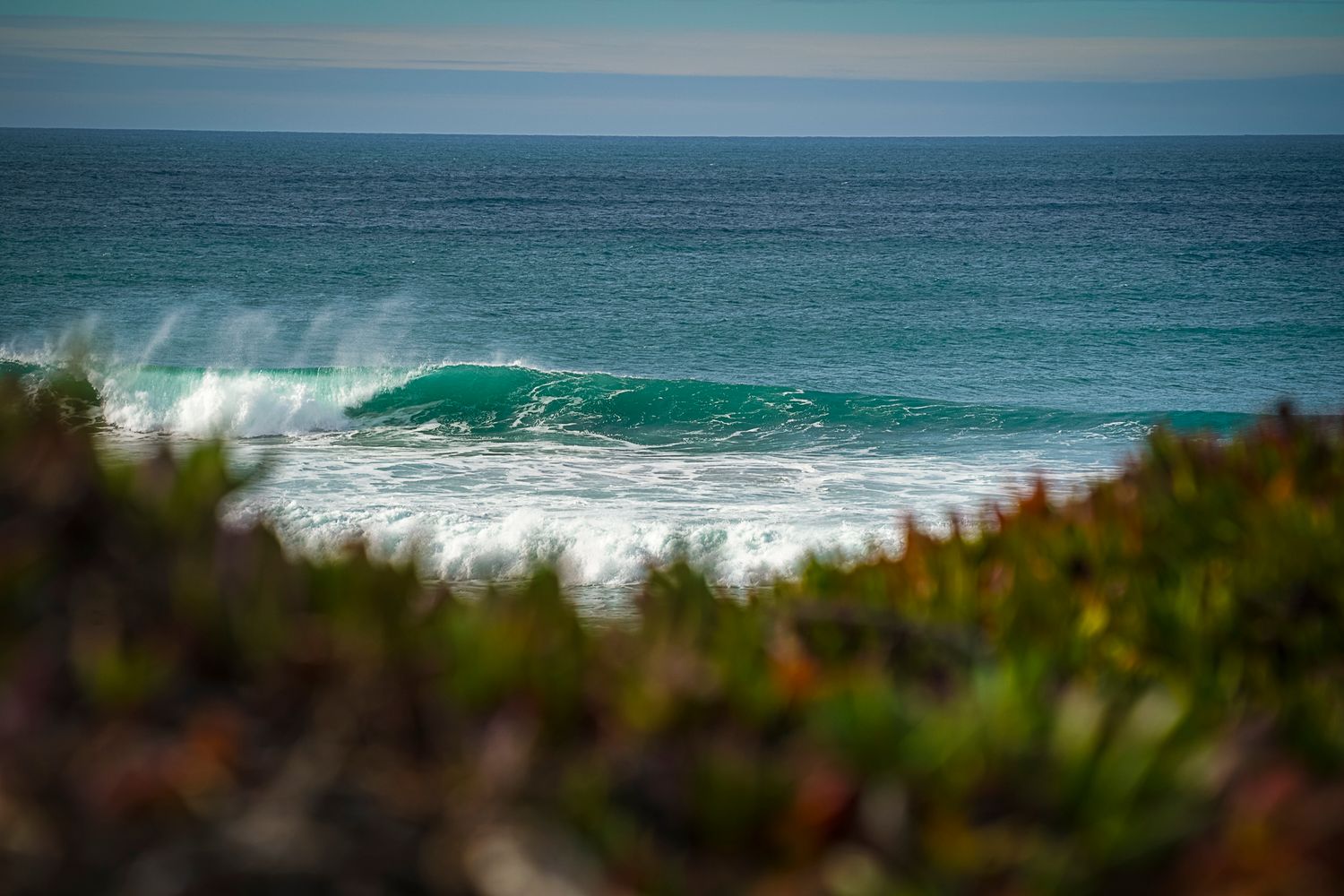
North and South Beach are the most exposed stretches of the peninsula — long, open, wind-scoured, with the full force of the Pacific arriving without anything to slow it down. They're not comfortable places to spend time in winter, and that's partly why I love them.
The drama here is elemental. Heavy surf, fast-moving fog, wide empty sand. I shoot these beaches in black and white more often than color — the tonal range suits the starkness of the place. South Beach in particular has a bleakness in the off-season that I find deeply compelling. There's no softness to it. Just light, sand, and ocean.
The Practice of Waiting
Point Reyes has taught me more about patience than any other place I shoot. The light changes here faster than almost anywhere — a ridge of fog can move in from the ocean in minutes, transforming a bright morning into something quiet and silver. Fighting that is pointless.
I've learned to come with intentions but hold them loosely. To have three or four locations in mind and let the morning tell me which one makes sense. Some of my best work has come from the moments just before I was about to give up and go home.
That's Point Reyes. It rewards presence more than planning.